Last Updated: October 26, 2026
No two cards alike. Multiple ways to match. One dot you don’t want to be left holding.
What do you see when you look at a playing card?
A color? A shape? A pattern?
What happens when you look a little closer?
Perhaps those dashed lines form a geometric shape. Maybe a familiar color appears in an unexpected place, or perhaps a card that initially seemed unrelated has more in common with another than you first realized.
That’s where Not dOt becomes more than a matching game.
At first glance, Not dOt fits comfortably into the world of fast-paced card games. Players observe, identify matches, take turns, and enjoy the challenge of group play. However, beneath those familiar mechanics is a layered experience designed to encourage careful observation, strategic thinking, and recognition of foundational art elements.
In Not dOt, there’s often more than one connection waiting to be discovered.
A Matching Card Game With More to Explore
Matching games are popular for good reason. They’re approachable, easy to introduce, and offer opportunities to practice skills such as visual recognition, attention, and turn-taking.
Not dOt builds on these familiar experiences with a distinctive approach to matching. No two cards are alike.
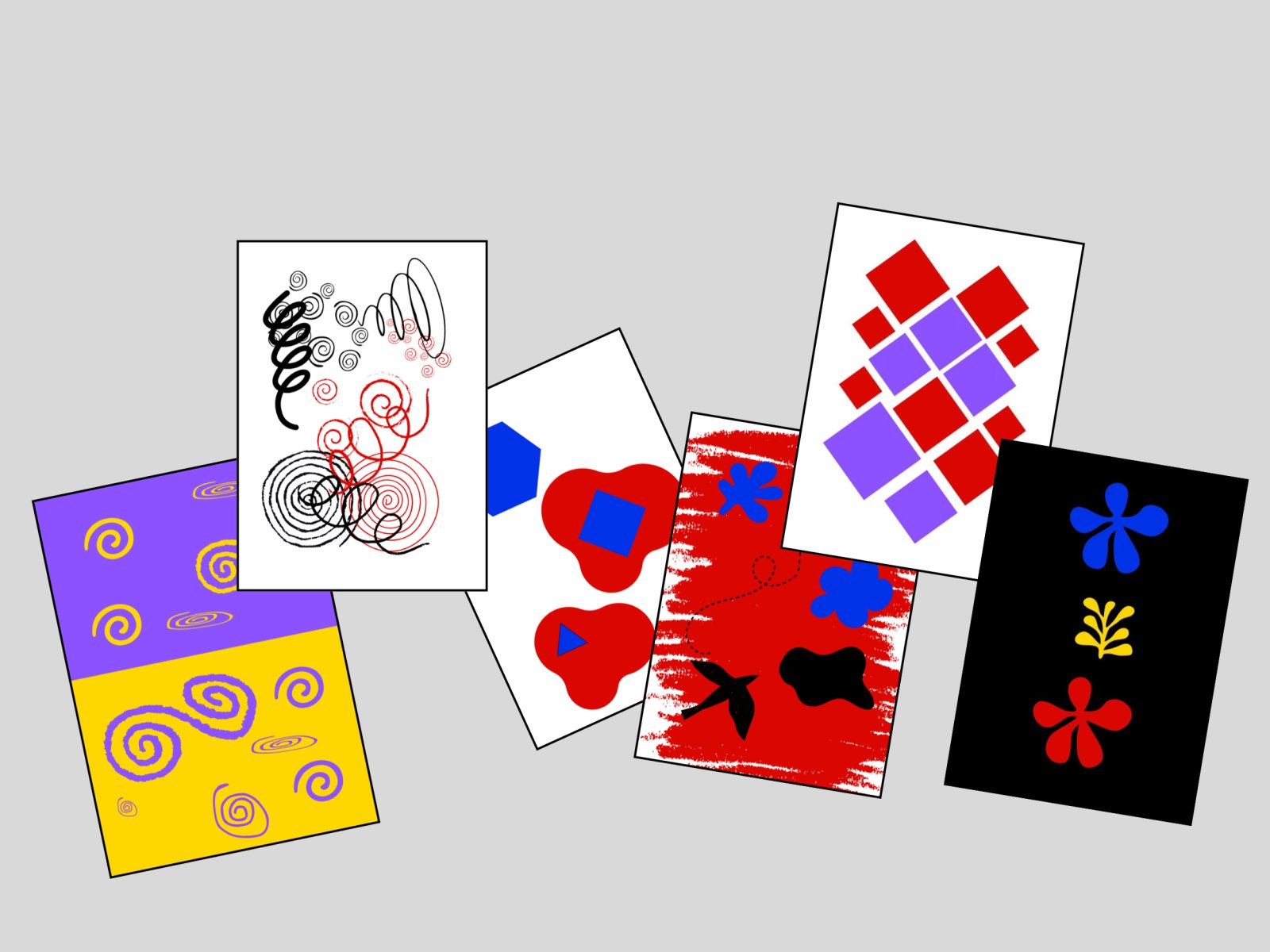
Instead of searching for identical images, players look for shared visual elements. A card might contain blue, dashed lines, and geometric shapes. Another might share the color blue but use entirely different shapes and patterns. A third might have no matching colors at all, yet contain a similar type of line.
Each card introduces opportunities to recognize relationships that aren’t necessarily obvious at first glance. The challenge isn’t simply finding something that looks the same. It’s discovering what two different things have in common.
Look Closer: The Power of Observation
Imagine a player holding a card with blue shapes and dashed lines. The first thing they notice might be the color.
Blue!
But what if matching by color isn’t their best option? A closer look might reveal that the dashed lines form a triangle. Now the player has another possibility to consider. What initially appeared to be a card defined by its color can also be recognized through its lines and shapes.This is an opportunity to practice visual discrimination-the ability to notice similarities and differences among visual information.
Players learn to look beyond the most immediately recognizable feature and consider additional details:
Is the line straight or curved?
Is the shape geometric or organic?
Are the colors the same?
Do the patterns share a common characteristic?
The more carefully players observe, the more connections they may discover, and those discoveries can change how they approach the game.
One Card. Multiple Possibilities.
One of the defining features of Not dOt is that a card can contain multiple visual elements. That means a player may have more than one way to recognize a connection.
Consider a card featuring:
* Blue and yellow colors
* Dashed and solid lines
* Geometric shapes
* Repeating patterns
Depending on the card in play, different features may become relevant. A player might recognize a matching color immediately. Another player might notice a shared line characteristic. Someone else might identify a relationship between shapes.
The same card can invite different observations. This encourages players to move beyond a single interpretation and consider alternatives.A card that doesn’t appear useful at first glance may become playable when viewed from a different perspective.
That’s an opportunity to practice flexible thinking.
Matching Becomes a Strategy
In Not dOt, recognizing a visual match is only part of the challenge. Players must also consider the game’s ultimate objective: pass the dot and avoid being the player left holding it! This adds another layer of decision-making to the fast-paced matching experience.
It’s not simply about identifying which cards can be played. Players must consider how their choices influence the game as it unfolds.
Which card should I play?
What visual elements connect my card to the one in play?
Are there other possible matches I haven’t noticed?
How might my next move affect my chances of passing the dot?
These decisions invite players to combine careful observation with strategic thinking.
A quick match might keep the game moving, but recognizing multiple connections can provide more options. While players are busy identifying colors, lines, shapes, and patterns, they’re also navigating the challenge of keeping the dot moving.
The goal isn’t just to find a match. It’s to make your matches count.
Because in Not dOt, every connection is an opportunity, and every move brings players closer to either passing the dot or being left with it!
Learning the Elements of Art Through Play
Color, line, shape, and pattern are foundational concepts in visual art. They’re also central to the connections players explore in Not dOt.
Rather than introducing these concepts exclusively through definitions or worksheets, the game provides opportunities to recognize them in action.
Color Recognition
Players identify colors and look for shared color relationships between cards.
Line Identification
Spiral, zigzag, and dashed lines become visual details worth noticing.
Players begin recognizing that lines can have different characteristics and functions.
Shape Recognition
Geometric and organic shapes provide opportunities to observe similarities, differences, and relationships.
Players may also discover shapes formed by the arrangement of other visual elements.
Pattern Recognition
Repeated colors, lines, and shapes encourage players to recognize visual patterns and recurring characteristics.
These observations can help reinforce familiarity with the elements of art.
Plus, because the concepts are embedded within gameplay, players have a reason to actively look for them. They’re not just identifying art elements. They’re using what they notice to make decisions.
Different Players May Notice Different Connections
One of the most interesting aspects of visual matching is that people don’t always notice the same details first. One player may be drawn immediately to color. Another may focus on shape.
Beyond the Game: Designing Connections Through STEM
What happens when players stop looking for matches and start designing them?
Not dOt doesn't have to end when the last card is played. The game's visual elements-color, line, shape, and pattern-provide opportunities to move beyond matching and into creative design. Instead of identifying which cards belong together, challenge players to create a new card that fits into an existing matching sequence.
The Not dOt Creative Connections Play Pack guides learners in progressive matching challenges.